
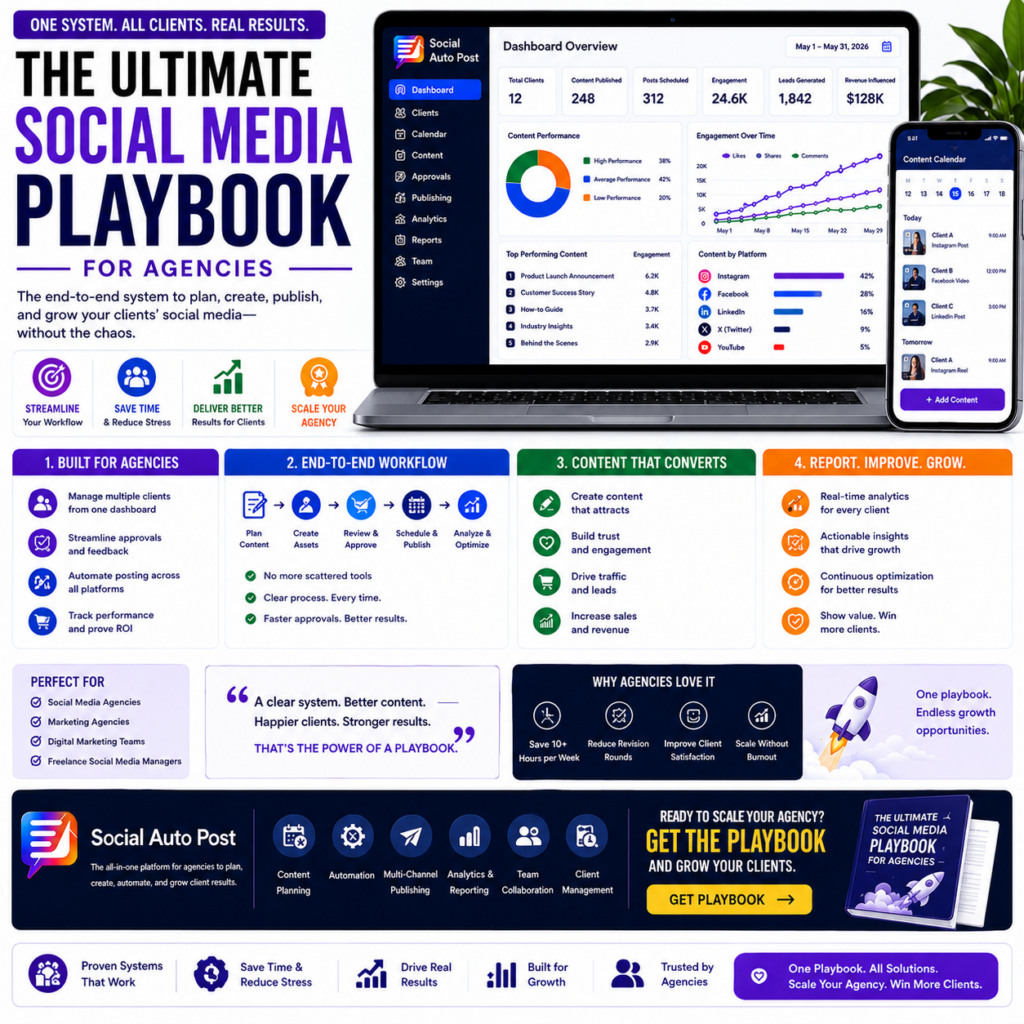
Introduction: Why Agencies Need Structured Systems
Agency social media management becomes difficult as teams scale across multiple clients, platforms, and campaigns.
Without a structured system, agencies often struggle with inconsistent posting, delayed approvals, and scattered communication.
As more clients are added, complexity increases quickly.
That is why successful agencies rely on a clear playbook that standardizes planning, production, approvals, publishing, and reporting.
This guide explains how to build a scalable workflow that reduces chaos and improves performance.
🖼️ Image: Social Media Workflow Overview
Alt text: social media agency workflow showing planning, approval, publishing, and reporting stages
1. Client Onboarding Process for Agencies
A strong system starts with onboarding.
Collect:
- Brand assets
- Target audience
- Tone of voice
- Platform access
- Content goals
- Reporting expectations
A structured onboarding process improves execution across all client accounts.
👉 Internal link: /client-onboarding
2. Defining Content Strategy for Clients
Instead of random posting, agencies should define clear content directions.
Common categories:
- Educational posts
- Product updates
- Case studies
- Industry insights
- Promotional content
This creates consistency and improves long-term performance.
3. Planning Monthly Content Workflows
Agencies should avoid daily planning chaos.
A monthly structure works better:
- Week 1: Strategy
- Week 2: Content creation
- Week 3: Design + revisions
- Week 4: Scheduling + reporting
This improves predictability and reduces workload spikes.
🖼️ Image: Content Planning Calendar
Alt text: agency social media content planning calendar with scheduled posts and campaign timelines
4. Centralized Content Management System
A single system should manage all client content.
It should include:
- Post status
- Approval stages
- Deadlines
- Assigned team members
👉 Internal link: /content-management-system
5. Creating Reusable Content Templates
Templates help agencies scale faster without losing quality.
Use templates for:
- Captions
- Campaign briefs
- Reports
- Client updates
This reduces repetitive work and improves consistency.
6. Approval Workflow for Client Content
Client approvals are often the biggest delay point.
A structured workflow improves speed:
Idea → Draft → Design → Internal Review → Client Review → Approved → Scheduled → Published
This keeps production predictable and controlled.
🖼️ Image: Approval Workflow System
Alt text: social media approval workflow diagram showing stages from draft to publishing
7. Improving Team Communication
Communication must be centralized.
Avoid using:
- Emails
- Slack threads
- Random documents
Instead, keep all feedback tied to each post or campaign.
This reduces confusion and revision cycles.
8. Content Repurposing Strategy
One idea can be reused across multiple platforms:
- LinkedIn post
- Instagram carousel
- Twitter/X thread
- Newsletter
- Short video script
This increases output without increasing workload.
9. Automation in Social Media Operations
Automation improves efficiency.
You can automate:
- Scheduling
- Publishing
- Reminders
- Reporting
- Notifications
👉 External link: https://blog.hootsuite.com/social-media-automation/
10. Assigning Roles in Agency Teams
Clear ownership prevents delays.
Typical structure:
- Account Manager
- Content Writer
- Designer
- Strategist
- Publisher
Each role should have clear responsibilities.
11. Tracking Internal Performance
Agencies should measure workflow efficiency, not just client results.
Track:
- Production speed
- Approval time
- Revision cycles
- Delivery consistency
👉 Internal link: /social-media-performance-tracking
12. Measuring Campaign Results
Clients care about outcomes.
Track:
- Leads generated
- Website traffic
- Engagement quality
- Conversions
- ROI
👉 External link: https://blog.hubspot.com/marketing/social-media-roi
🖼️ Image: Analytics Dashboard
Alt text: social media agency analytics dashboard showing engagement, reach, and conversions
13. Building a Content Library
A content library improves speed and consistency.
Store:
- Templates
- Past campaigns
- High-performing posts
- Brand assets
This helps teams work faster and avoid duplication.
14. Using Data to Improve Strategy
Data should guide decisions.
Review monthly:
- Best-performing content
- Weak posts
- Platform performance
- Engagement trends
This helps refine future campaigns.
15. Scaling Agencies with Systems
Before hiring more staff, improve systems.
Ask:
- Can this be automated?
- Can this be simplified?
- Can this be templated?
Systems scale agencies better than headcount alone.
Example Workflow for Agencies
- Client onboarding
- Strategy creation
- Content planning
- Content production
- Internal review
- Client approval
- Scheduling
- Publishing
- Reporting
- Optimization
Common Mistakes in Agencies
- No structured workflow
- Scattered communication
- No content strategy
- No centralized system
- Manual repetitive work
These slow down growth and reduce quality.
Final Thoughts
Strong agencies don’t rely on effort alone.
They rely on systems.
A structured workflow improves speed, consistency, and scalability across all clients.
CTA: Scale Your Agency Operations
Stop managing campaigns manually.
Use automation and structured workflows to scale faster with less effort.
👉 Explore tools that simplify agency social media management and streamline your entire workflow.