
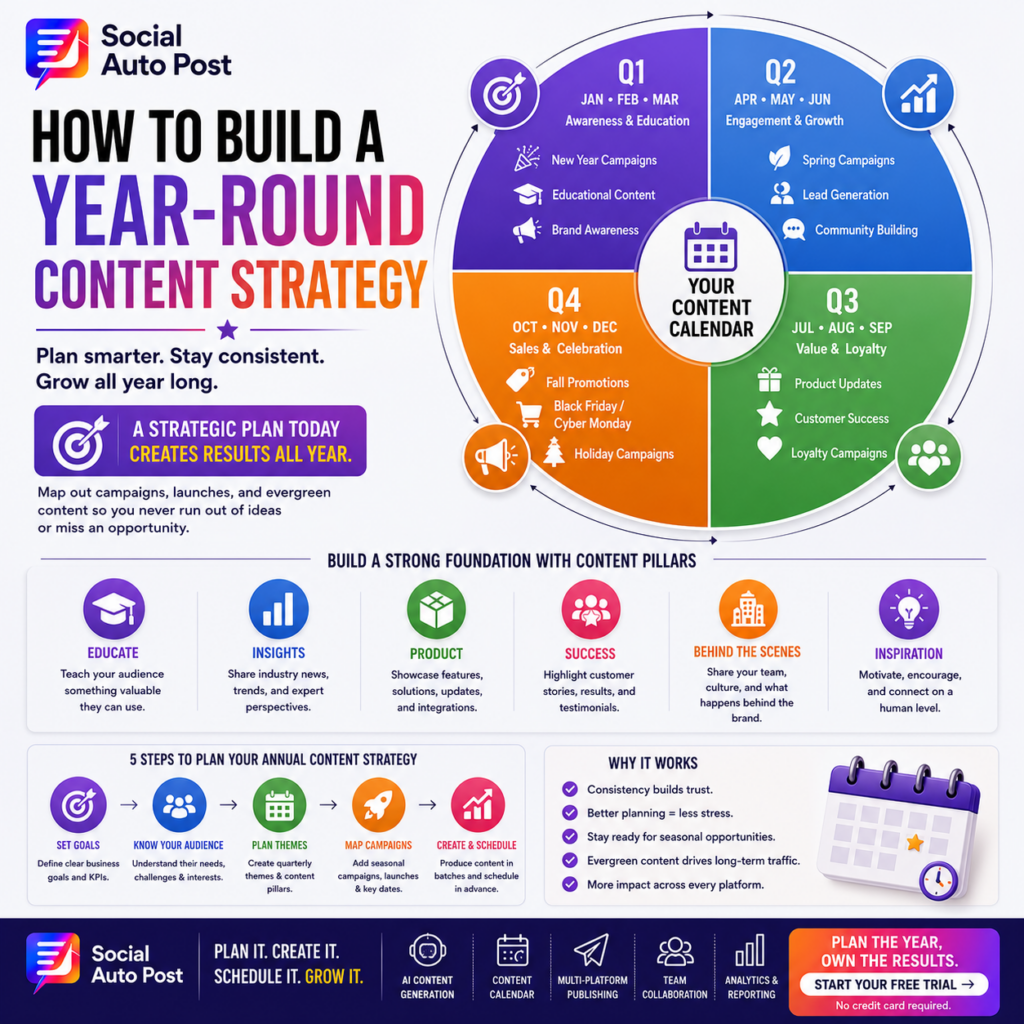
Annual Content Strategy: How to Build a Year-Round Marketing Plan
Building a structured annual content strategy is essential because many businesses approach digital marketing one frantic month at a time. January arrives, and the marketing team scrambles to fill the empty publishing calendar. By February, deadlines start slipping, and by March, team members are asking: “What should we post next week?”
This reactive approach wastes time, increases stress, and leads to inconsistent brand messaging. The most successful growth teams don’t think week-to-week—they plan in quarters and years. Developing a comprehensive annual content strategy gives your organization a clear roadmap that aligns seasonal promotions, product launches, evergreen resources, and corporate growth targets into one cohesive framework.
Why Developing an Annual Content Strategy Matters
Planning an entire year of publishing does not mean writing every single post on day one. Instead, it means building a strategic architecture that guides all marketing initiatives.
Key business benefits include:
-
Greater Brand Consistency: Ensures every channel speaks with a unified voice.
-
Improved Team Collaboration: Eliminates last-minute panics for writers and graphic designers.
-
Data-Driven Alignment: Connects every campaign directly to long-term business goals.
-
Higher Resource Efficiency: Facilitates asset repurposing across multi-channel campaigns.
According to HubSpot’s Marketing Strategy Trends Report, brands operating with documented annual plans experience significantly higher marketing returns than those relying on short-term planning cycles.
core Elements of a Year-Round Marketing Strategy
1. Setting Clear Objectives and Target Audience Personas
Every campaign must support measurable goals—such as increasing qualified leads, driving organic traffic, or boosting customer retention. Defining buyer personas, pain points, and preferred platforms ensures your topics answer real customer questions.
2. Establishing Core Strategic Pillars
Content pillars maintain consistency throughout the year. Most organizations perform best with 4 to 6 recurring themes:
| Pillar Category | Messaging Focus | Key Deliverables |
| Educational | How-to tutorials, best practices, FAQs | Long-form guides, infographics, video walkthroughs |
| Industry Insights | Market analysis, trends, expert opinions | Trend reports, platform updates, podcasts |
| Product & Features | Use cases, integrations, capability demos | Product updates, feature showcases, workflows |
| Social Proof | Testimonials, client metrics, case studies | Verified customer reviews, video interviews |
| Company Culture | Behind-the-scenes stories, team milestones | Culture spotlights, event recaps |
For an in-depth breakdown of organizing your messaging pillars, read our guide on social media content pillars.
Aligning Quarterly Themes and Seasonal Campaigns
Structuring your calendar into distinct quarters prevents burnout and maintains marketing focus:
[Q1: Education & Brand Awareness] ──> [Q2: Lead Generation & Demos] ──> [Q3: Customer Proof & Community] ──> [Q4: Major Product Launches & Sales]
Balancing Evergreen and Timely Content
A balanced annual content strategy divides production into two distinct categories:
-
Evergreen Resources (70–80%): In-depth guides, FAQs, and tutorials that generate organic search traffic for years.
-
Seasonal & Trending Content (20–30%): Time-sensitive campaign launches, event recaps, and holiday promotions that drive immediate engagement.
To learn how to strike the perfect balance between long-term assets and current trends, explore our analysis of evergreen content marketing vs trending updates.
Execution Framework for an Annual Content Strategy
For actionable advice on repurposing blog content into social copy, review our guide on leveraging AI social media captions.
Streamlining Year-Round Execution with AI and Social Auto Post
Executing a full annual content strategy manually can strain team bandwidth. Leveraging AI writing assistants alongside dedicated scheduling software transforms long-term planning into an efficient daily workflow.
Using Social Auto Post, growth teams can:
-
Plan Multi-Channel Calendars: Color-code quarterly themes and organize campaigns months in advance.
-
Generate AI-Powered Variations: Instantly produce platform-tailored post hooks for LinkedIn, Facebook, Instagram, and X.
-
Automate Publishing Workflows: Set up approval queues and automated scheduling to maintain posting consistency effortlessly.
Scale Your Content Marketing Engine
Transform your long-term planning into predictable growth using automated distribution systems:
-
Learn How Social Media Growth Tips Help Brands Stay Consistent
-
Discover How to Repurpose One Long-Form Asset into 20 Unique Social Posts
Frequently Asked Questions
What is an annual content strategy?
An annual content strategy is a long-term roadmap that organizes a brand’s publishing schedule around business objectives, quarterly themes, product launches, and seasonal opportunities for a full year.
How far in advance should a business plan its marketing?
Most organizations benefit from maintaining a high-level roadmap for the entire year while detailing specific execution plans on a quarterly basis. This provides strong structure while preserving flexibility.
Should all content be scheduled months in advance?
No. A successful strategy typically schedules 70–80% of evergreen and campaign content in advance, leaving 20% of the schedule open for timely news, viral trends, and real-time updates.
Take Control of Your Marketing Roadmap
Start Your Free Trial of Social Auto Post Today and turn long-term planning into a sustainable competitive advantage!