
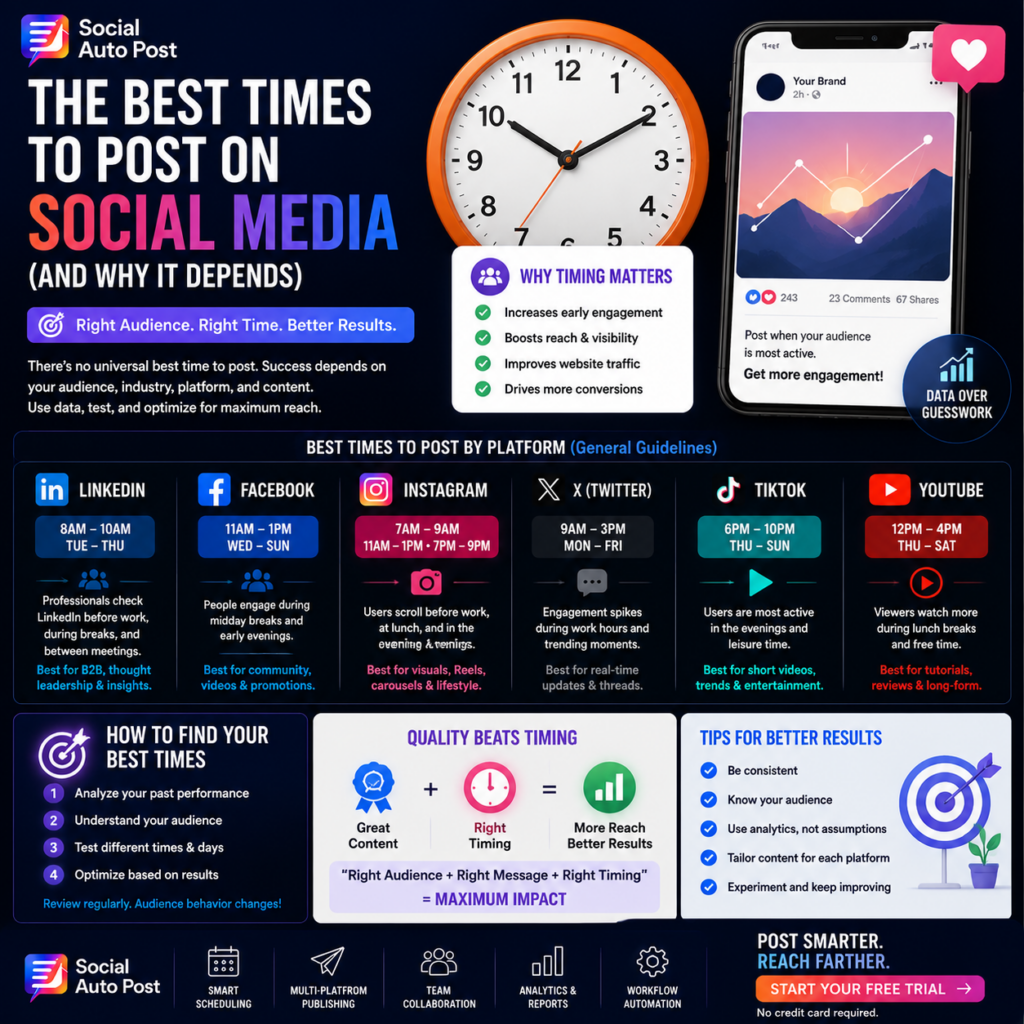
Best Time to Post on Social Media: Data-Driven Optimization Guide
One of the most frequent questions digital marketers ask is straightforward: “When is the exact best time to post on social media?”
If you search online, you will find thousands of generic cheat sheets suggesting universal rules: post at 9:00 AM, avoid weekends entirely, publish during lunch breaks, or stick strictly to Tuesdays and Thursdays. While these industry benchmarks provide a basic starting point, they are far from universal truths.
In reality, the optimal publishing window depends heavily on your specific audience demographics, industry sector, target platforms, and overarching content strategy. A B2B software enterprise targeting corporate executives operates on completely different engagement cycles than an e-commerce brand targeting consumer shoppers.
High-performing growth teams do not rely on static internet charts. Instead, they leverage real-time behavioral analytics to pinpoint their unique publishing windows.
Why Algorithmic Timing Directly Impacts Reach
Modern social media algorithms prioritize velocity—specifically how quickly a post gathers early interaction after going live. When a publication receives immediate likes, thoughtful comments, reposts, and bookmark saves, platform feeds interpret the asset as high-value content and expand its organic distribution.
Publishing when your specific follower base is actively scrolling directly yields key advantages:
-
Higher Initial Engagement Rates: Accelerates early interaction metrics to boost algorithmic reach.
-
Expanded Brand Visibility: Places your updates at the top of user feeds during peak activity windows.
-
Increased Website Traffic: Drives higher click-through rates (CTR) on promotional and educational links.
-
Improved Conversion Velocity: Reaches decision-makers when they are most receptive to taking action.
Platform Usage Patterns Overview
While your own account analytics should always take precedence, understanding baseline channel behaviors helps shape your initial distribution experiments across major networks.
| Social Platform | Target Audience Profile | Typical Peak Activity Windows | Top-Performing Asset Formats |
| B2B decision-makers & professionals | Morning work hours & mid-week breaks | Industry breakdowns & carousel decks | |
| Local communities & broad demographics | Midday lunch hours & early evenings | Community stories & video updates | |
| Visual shoppers & lifestyle consumers | Early mornings, lunch breaks & evenings | Multi-slide carousels & short Reels | |
| X (Twitter) | Tech, news & real-time commentary | Business hours & trending live events | Concise threads & industry insights |
| TikTok | Gen Z & digital-native consumers | Late afternoon & leisure evening hours | Short-form tutorials & trend commentary |
Building a Data-Driven Schedule Optimization Strategy
Relying on generic recommendations creates severe blind spots. Your followers may reside in different time zones, exhibit unusual browsing habits, or engage more heavily with specific media types.
Common Scheduling Pitfalls to Avoid
Strategy Warning: Perfect timing cannot save poor content. A low-quality post published at peak activity will still underperform, whereas a high-value asset published during average hours can drive massive engagement.
-
Following Generic Advice Without Account Testing: Universal rules ignore your brand’s unique audience habits. Always prioritize first-party account analytics.
-
Ignoring Audience Time Zone Spreads: If 40% of your followers live in a different region, publishing solely in your local time zone leaves massive reach on the table.
-
Focusing Exclusively on Vanity Metrics: Tracking likes alone can hide real business impact. Measure conversions, link clicks, and revenue metrics alongside raw engagement.
For actionable frameworks on assembling high-performing assets efficiently before setting your publishing calendar, explore our guide on building scalable content batching workflows.
Optimize Your Distribution with Social Auto Post
Manually logging into multiple channels to hit exact publishing windows is inefficient and hard to scale. This is precisely why Social Auto Post provides a centralized environment to streamline your entire publishing architecture.
Featuring intelligent scheduling engines, multi-channel management dashboards, automated workflow controls, and real-time performance analytics, Social Auto Post eliminates the guesswork from timing your updates. Instead of watching the clock, your team can build data-backed scheduling pipelines that deliver the right message to the right audience at the ideal time.
Refine Your Social Media Operations
Building a scalable social media strategy requires combining data analysis, strong messaging, and automated publishing workflows. Read through our technical guides to continue sharpening your execution.
-
Explore Our Complete Playbook on Repurposing Long-Form Assets Into Social Media Content
-
Review Our Framework for Setting Up Multi-Channel Analytics Tracking Dashboards
Frequently Asked Questions
What is the best time to post on social media?
There is no single universal best time to post on social media. The optimal window depends on your specific audience demographics, geographical locations, industry sector, and active platforms. Analyzing your own account performance metrics provides the most accurate timing guidance.