
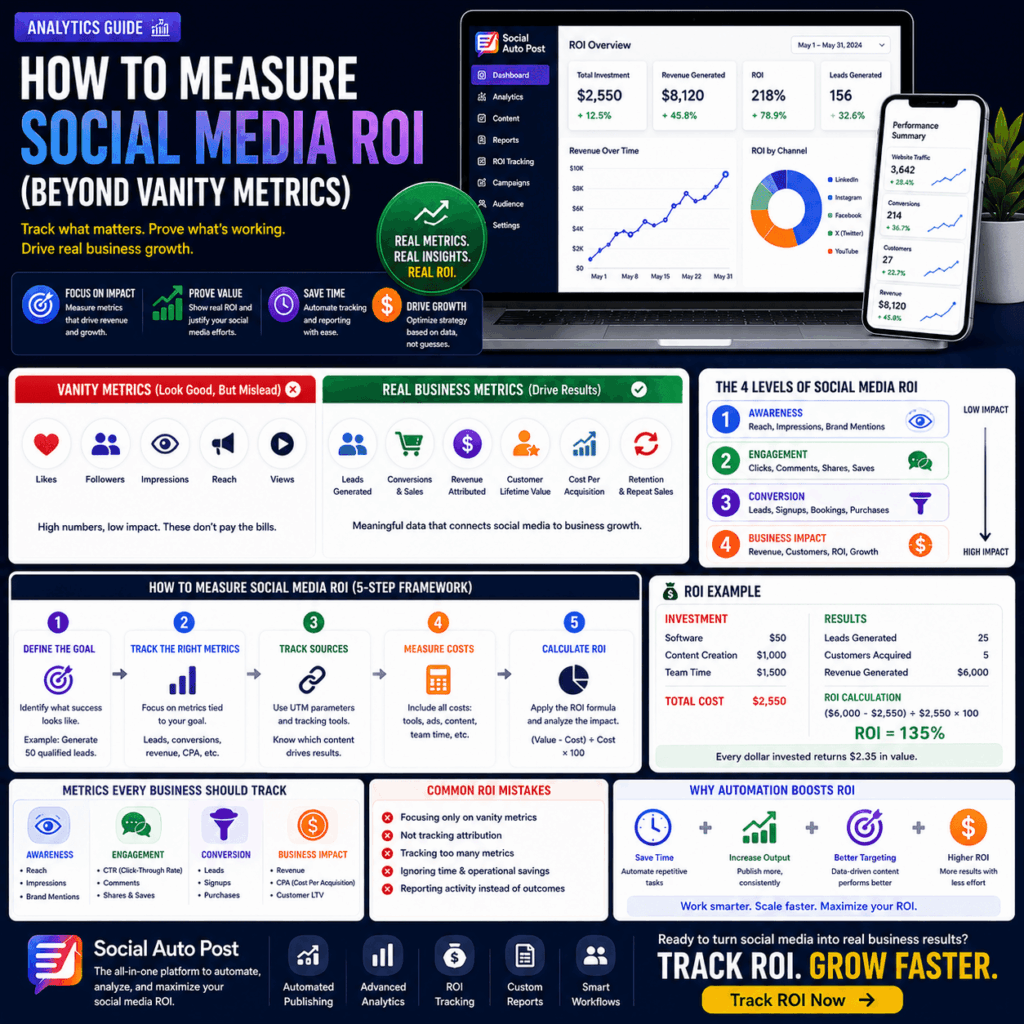
Vanity metrics are numbers that appear impressive but often have little connection to actual business outcomes.
While followers, likes, impressions, and reach can provide useful context, they rarely show whether social media is generating leads, customers, or revenue.
To better understand business impact, it’s important to combine engagement data with conversion and attribution metrics. You can also explore our Marketing Attribution Models Explained guide to learn how different touchpoints contribute to conversions.
The Metrics That Actually Matter for Marketing ROI
The most successful marketing teams focus on metrics tied directly to business growth rather than surface-level engagement.
Key metrics include:
- Lead generation
- Customer acquisition
- Revenue attribution
- Conversion rates
- Customer lifetime value
- Retention rates
For businesses looking to improve campaign measurement, our UTM Tracking Best Practices guide can help create more accurate reporting.
Additionally, tools such as Google Analytics provide detailed visibility into traffic quality, conversions, and customer journeys.
Building a Social Media Measurement Framework
A successful measurement framework starts with clearly defined business objectives.
Examples include:
- Generating leads
- Increasing trial signups
- Driving ecommerce sales
- Growing newsletter subscribers
After defining goals, establish measurable KPIs and track traffic using UTM parameters and attribution tools.
The free Google Campaign URL Builder can help create campaign tracking links for accurate reporting.
For a deeper understanding of campaign performance, see our Content Marketing ROI Guide.
Measuring Revenue and Customer Acquisition
One of the most important indicators of marketing success is the ability to connect social activity to revenue.
Track:
- Qualified leads
- Sales opportunities
- Customer acquisitions
- Revenue generated
- Cost per acquisition
Platforms such as HubSpot Marketing Analytics can help businesses connect marketing activities with revenue outcomes.
This approach provides executives with meaningful business insights rather than engagement reports alone.
How Automation Improves Marketing Performance
Automation has become a major driver of marketing efficiency.
By automating repetitive tasks, teams can:
- Publish content faster
- Improve consistency
- Reduce manual work
- Increase content output
- Save valuable time
As a result, businesses gain both operational and revenue benefits.
If you’re evaluating automation strategies, our Social Media Automation Guide provides practical recommendations for scaling content efficiently.
The Future of Social Media Performance Measurement
Marketing measurement is rapidly evolving.
For platform-specific reporting guidance, marketers can also review resources available through the Meta Business Help Center.